Abigail Lowe, Michael J.O. Pocock and Diana Bowler describe some recent work carried out in consultation with recording scheme verifiers.
Volunteer verifiers play a key role in validating the thousands of biological records collected by citizen scientists each year, helping to ensure that biodiversity data are accurate and reliable. However, the growing number of records places increasing demands on volunteer verifiers, meaning some valuable data may take longer to become available.
A recent Terrestrial Surveillance Development and Analysis (TSDA) technology review identified automated identification as a priority area for supporting biodiversity monitoring. Building on this, we explored how current verification processes could be made more sustainable and how technology could support the vital work of volunteer verifiers.
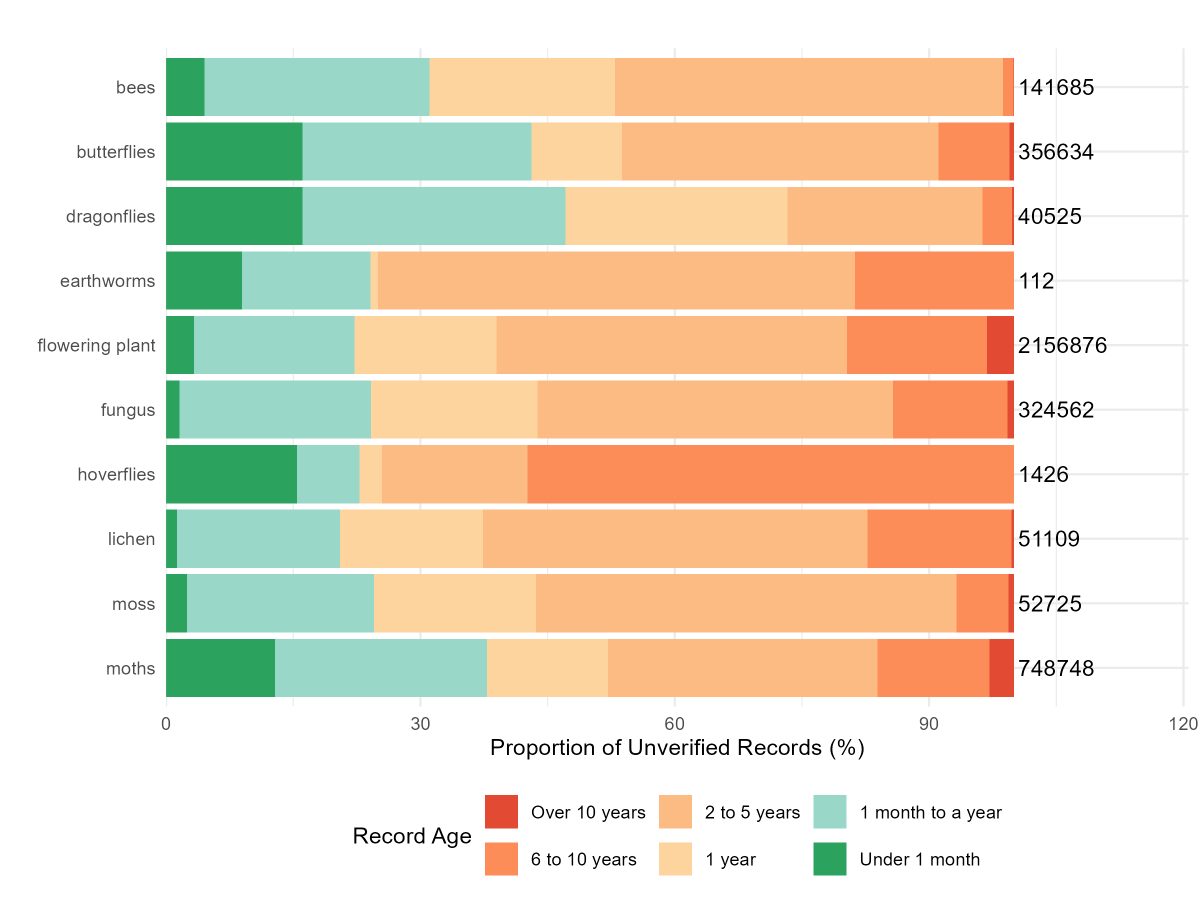
We analysed records submitted through iRecord to understand the scale of the current verification challenge and how long records take to be verified. We found that 85% of all unverified records were under one year old, with 59% of these under one month. Ten major taxonomic groups accounted for more than half of all unverified records, highlighting where additional support could have the greatest impact (Figure 1).
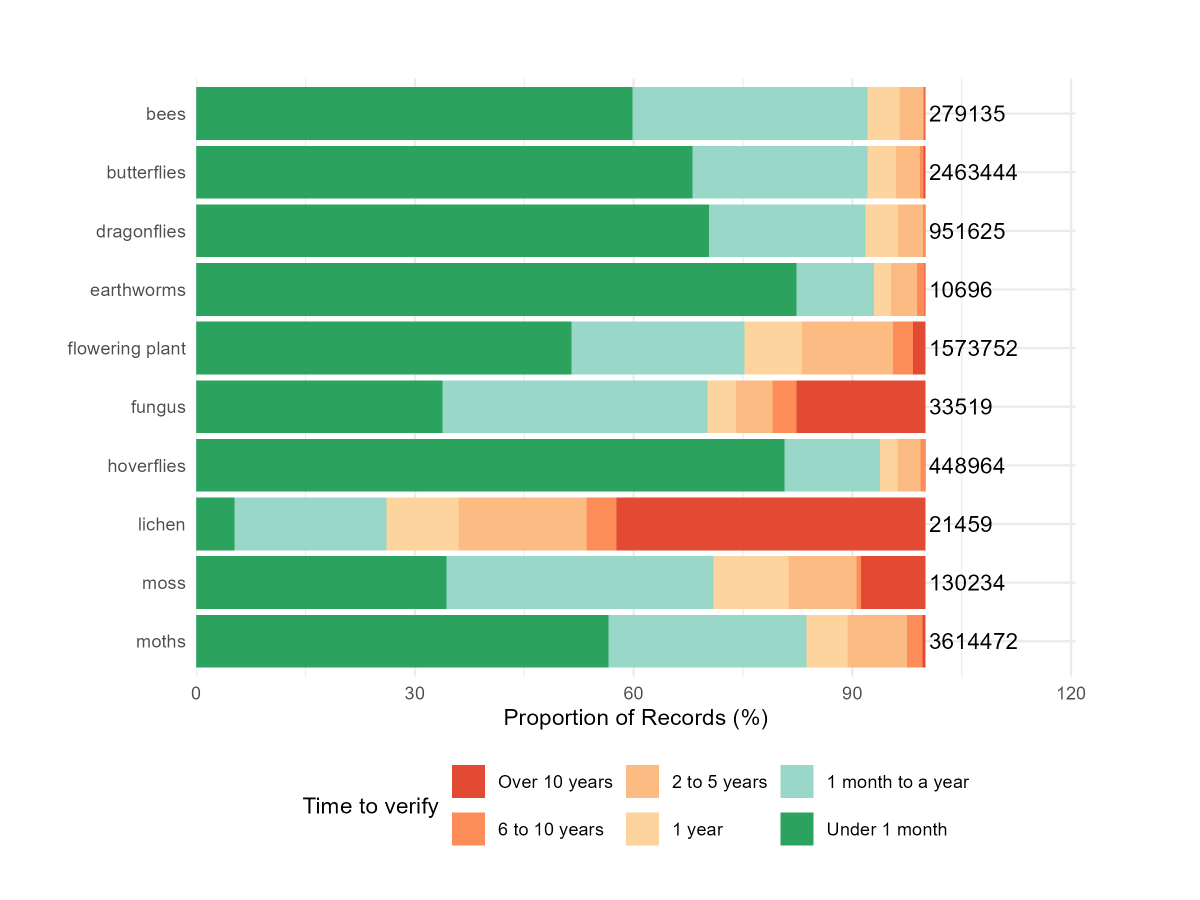
Records were generally verified quickly, but time taken varied more across taxonomic groups (Figure 2). For fungi and lichens, a large proportion of records were verified after 10 years, reflecting recruitment of new verifiers.
We held two online focus groups with volunteer verifiers to understand their experiences, the challenges they face, and how technology could help support their work. Thank you so much to everyone who shared their insights. Although verification workloads were generally considered manageable, verifiers highlighted increasing pressure due to growing numbers of records and a reliance on a small number of individuals in some schemes. The approach to prioritising records varied between schemes, with varying guidance available. Most of the verifiers we spoke with prioritised records with photographs, from experienced recorders, or of distinctive or common species, and many use personally developed batch verification approaches (i.e., simultaneously verifying multiple records that pass some criteria), highlighting opportunities for automation.
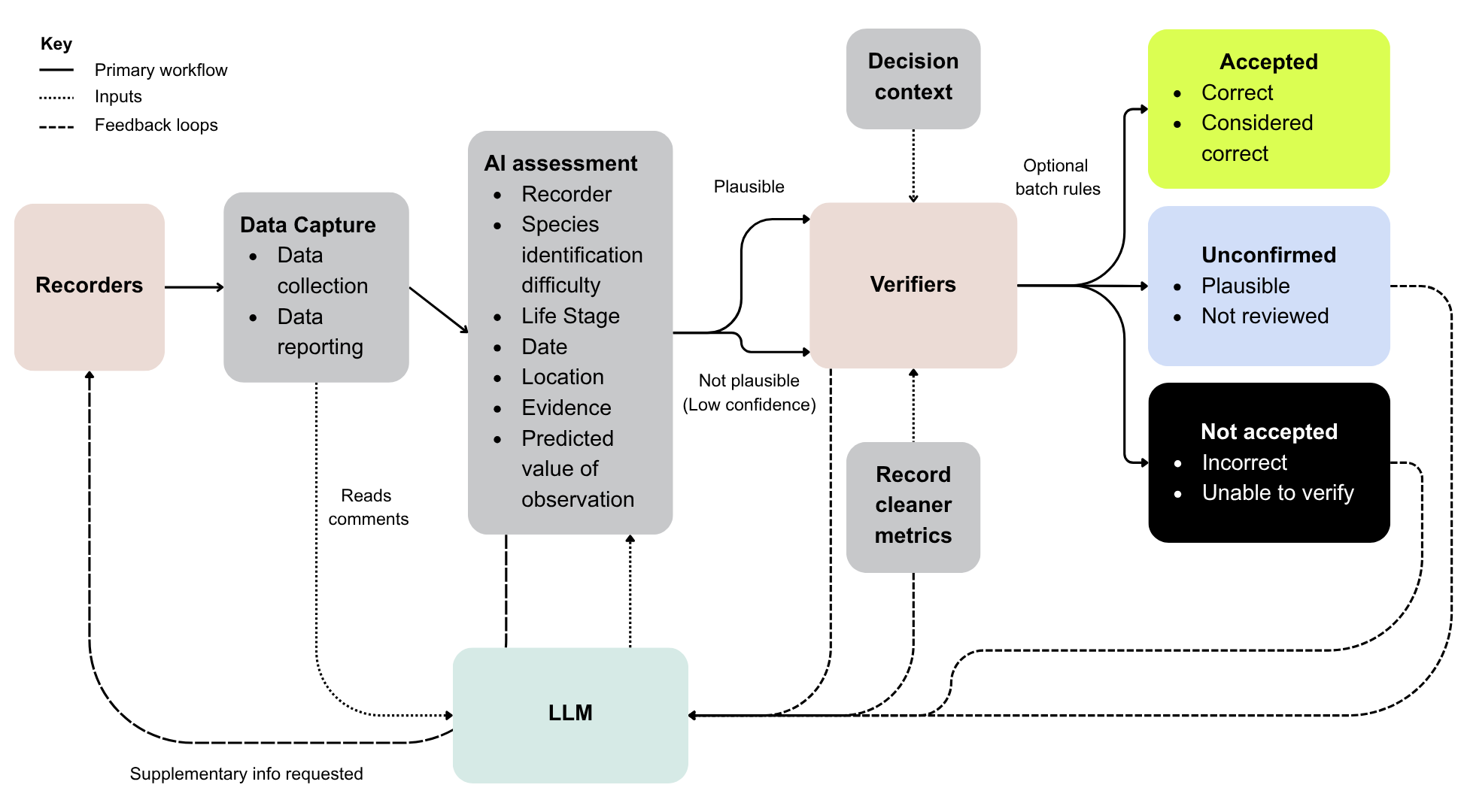
Those that attended the workshops were generally supportive of using technology to support their workflow, particularly for flagging records and prioritising records for review, but emphasised the importance of maintaining human oversight of decisions (Figure 3, at top of this web page).
The opportunities identified included:
A system that combines different types of information (e.g. photographs, recorder experience, location and timing of observations) to estimate how likely a record is to be correct.
- AI tools that explain the suggestions and help provide clearer feedback to both verifiers and recorders.
Any future AI tools would be designed to support, rather than replace, existing tools such as Record Cleaner. By combining existing checks with additional information from records and their context, AI could help verifiers prioritise which records need the most attention. However, it is also important to recognise that technology cannot solve every verification challenge. Some species can only be identified using specialist approaches such as microscopy or genetic analysis, meaning that expert judgement will always remain essential and some records may remain unresolved.
Supporting verifiers is critical for the long-term sustainability of biological recording. The opportunities identified through this work could help make verification more efficient while maintaining human oversight and improving feedback to recorders. Although this work focused on the National Recording Schemes and Societies, many of the challenges and opportunities identified are also relevant to other biodiversity monitoring initiatives. Further work is needed to explore how these approaches could be developed and how they can best support verifiers and recorders.
The full report is currently undergoing final review and approval. Please contact Abigail Lowe if you’d like to receive a copy when it is ready. This work was funded by the Joint Nature Conservation Committee (JNCC) through the TSDA partnership.