
BRC Science Review
Drawing on over 140 million species records collected by volunteer recorders, recording schemes and citizen scientists, biodiversity data has transformed our understanding of the natural world over the past decade. From tracking shifts in species distributions to informing national biodiversity indicators, the research demonstrates the growing importance of citizen science for long-term monitoring in addressing environmental challenges.
A new review of research (available here) highlights the vital role of biological recording and national monitoring schemes and taxonomic societies in helping scientists understand how Britain's wildlife is changing. The review is also being released alongside a new GBIF hosted portal (available at: data.brc.ac.uk) that will help users explore the data collected by biological recording, which BRC help to mobilize.
The number of users sharing species occurrence records using iRecord has rapidly increased over the last decade.
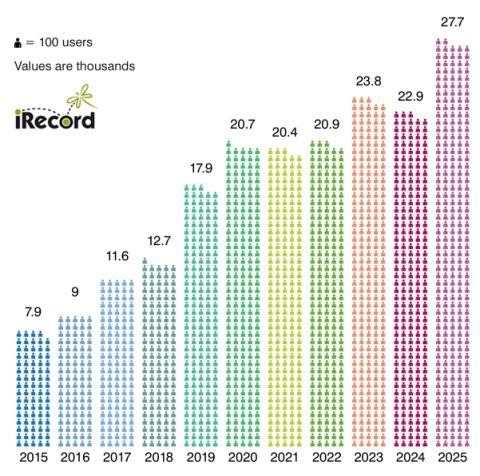
Calculated as the total number of Indicia users sharing records with iRecord for reporting, based on year of entry.
A recurring theme throughout the review, and shown by the data in the portal, is the growing contribution of citizen science. Digital recording tools such as iRecord have enabled more people than ever before to contribute wildlife observations
Research themes of studies using species occurrence records that were supported by the BRC.
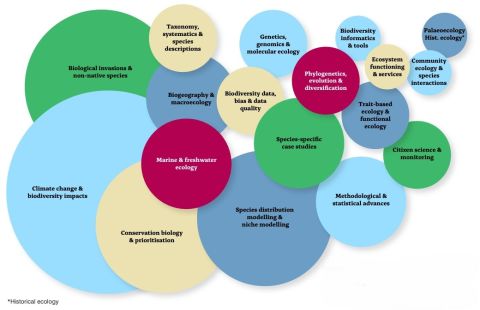
The size of each circle indicates the relative amount of research dedicated to each theme.
Occurrence records are being used by researchers to tackle urgent questions about biodiversity change and the impacts of drivers such as climate change and invasive species
Key BRC-related metrics
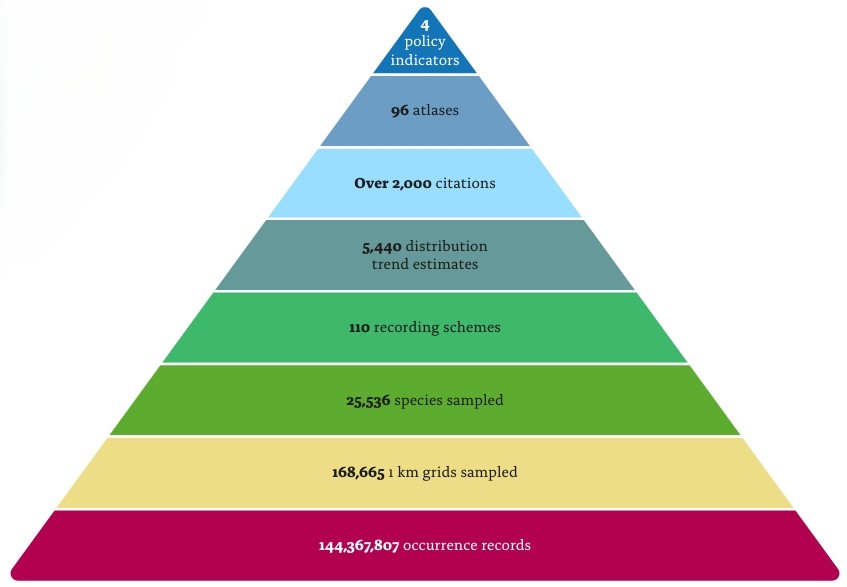
Numbers of records and species are based on data in Indicia only.
The data ensures that invertebrates are represented in biodiversity indicators, including for pollinators and conservation priority species.
Looking ahead, the review points to new opportunities created by advances in technology, including artificial intelligence, automated monitoring and environmental DNA (eDNA). Combined with the continued commitment of volunteer recorders, these innovations are expected to further strengthen the UK's ability to monitor biodiversity and respond to environmental change.